At our Specialized Outpatient Medical Practice in Sofia, we offer a comprehensive and individualized approach to detoxification. Each program is tailored to the patient’s health status, lifestyle, and specific needs and may combine different methods from integrative, regenerative, and biological medicine.
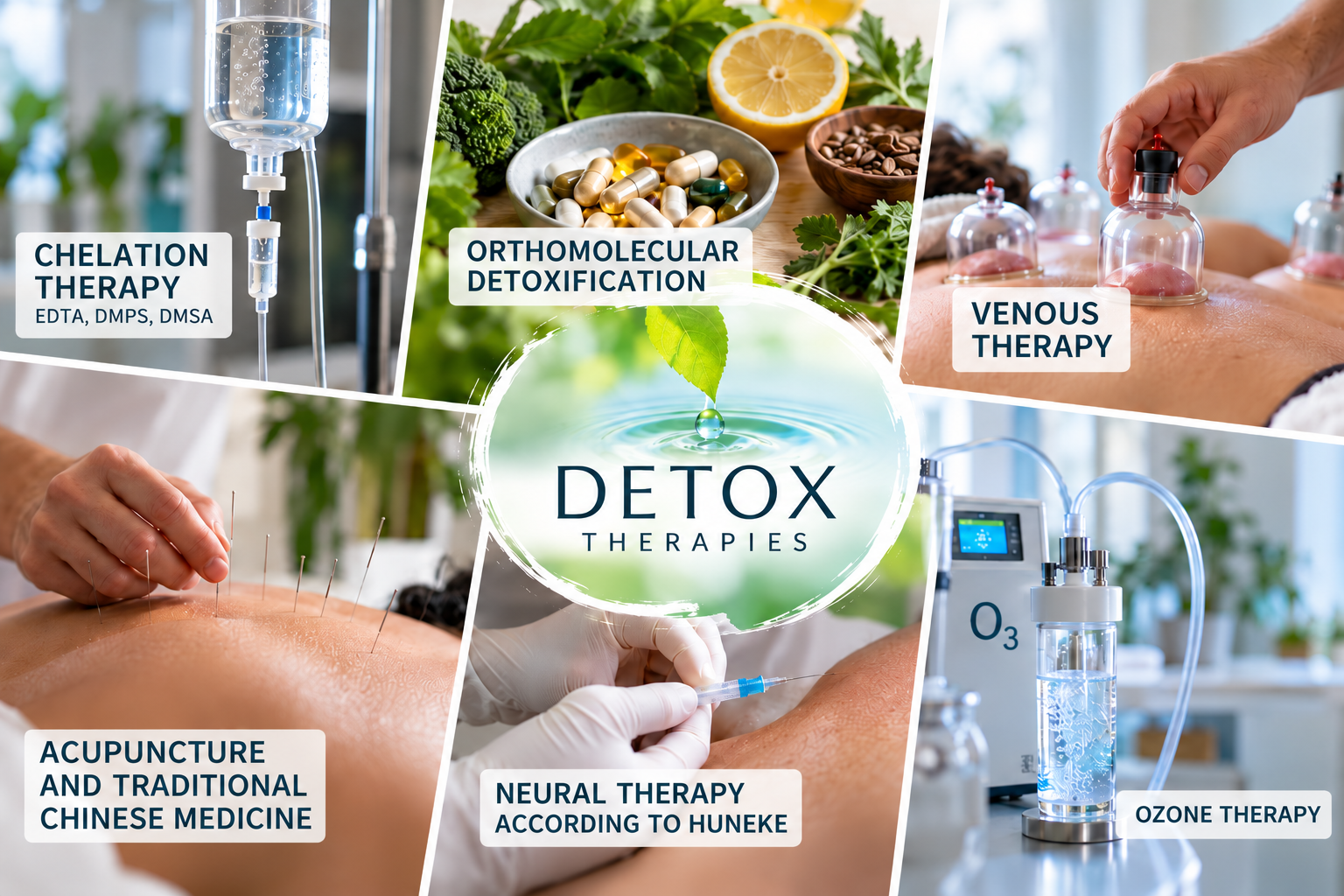
1. Chelation Therapy – EDTA, DMPS, DMSA
Chelation therapy plays an important role in detoxification programs and is used to support the elimination of certain metals from the body.
The accumulation of metals may be associated with increased free-radical formation and oxidative stress, which are involved in cellular aging and degenerative processes. In modern life, people may be exposed to a variety of substances through the air, food, water, occupational environments, and lifestyle-related factors.
Chelation therapy uses agents such as EDTA, DMPS, and DMSA, which can bind specific metal ions and support their elimination from the body.
For this reason, assessing an individual’s potential toxic-metal burden and selecting an appropriate detoxification protocol may form part of a broader therapeutic plan.
Chelation therapy is applied on an individual basis. The choice of chelating agent, dosage, and duration of treatment is determined according to the patient’s specific needs.
2. Orthomolecular Detoxification
The orthomolecular approach focuses on providing the body with essential vitamins, minerals, trace elements, amino acids, antioxidants, and other biologically active substances.
Nutrition and micronutrient balance are important for the normal function of numerous cellular and metabolic processes. Orthomolecular therapy may therefore be incorporated into individualized detoxification and recovery programs.
Depending on the patient’s needs, the program may include nutritional recommendations, targeted supplementation, and infusion protocols. The aim is to support the body’s natural metabolic and regenerative processes and help restore an optimal balance of essential micronutrients.
3. Gerson Therapy
Gerson Therapy is a comprehensive nutritional and detoxification approach developed by Dr. Max Gerson. The program includes a specific dietary regimen, freshly prepared fruit and vegetable juices, individually selected nutrients, and procedures intended to support detoxification, including coffee enemas.
At our medical practice, individual elements of the program are selected and applied according to the patient’s condition and specific needs.
4. Cupping Therapy
Cupping is a traditional therapeutic method that is also used today as part of an integrative treatment approach.
By creating localized negative pressure over selected areas of the body, cupping acts on the skin, subcutaneous tissues, muscles, and fascia. It is commonly used with the aim of stimulating local blood circulation and lymphatic flow, as well as relieving muscular tension.
The areas of application are selected individually according to the patient’s condition and the therapeutic objective. Many of the commonly used areas are located on the back and are considered part of the body’s interconnected regulatory systems.
The main effects targeted by cupping therapy include circulatory and lymphatic stimulation, local hyperemia, stimulation of tissue metabolism, and support for tissue oxygenation.
Cupping may be incorporated into a broader program combining different approaches to recovery and detoxification.
5. Acupuncture and Traditional Chinese Medicine
Acupuncture is one of the principal methods of Traditional Chinese Medicine and is used within integrative therapeutic programs to influence different functional systems of the body.
According to the principles of Traditional Chinese Medicine, stimulation of specific acupuncture points is intended to support the free flow of vital energy, or Qi, and help restore internal balance.
Within detoxification programs, acupuncture points may be selected in relation to metabolism, digestion, lymphatic function, and the functions of the liver and kidneys.
Acupuncture may also be used to support elimination processes and to address patterns described in Traditional Chinese Medicine as the accumulation of “Dampness” and “Stagnation.”
The therapy may be combined with other methods according to the patient’s individual treatment program.
6. Neural Therapy According to Huneke
Neural therapy is a method that uses the regulatory properties of the autonomic nervous system and its connections with different structures and functional systems of the body, with the aim of supporting the body’s regulatory and restorative mechanisms.
The treatment involves the injection of small amounts of a local anesthetic, most commonly procaine, into specific points and areas of the body.
The aim is to support self-regulatory processes and activate the body’s own restorative mechanisms, including as part of comprehensive detoxification programs.
Neural therapy may be incorporated into an individualized integrative treatment protocol and combined with other methods, including ozone therapy, infusion therapy, acupuncture, and other regenerative approaches.
7. Medical Ozone Therapy
Medical ozone therapy uses a controlled mixture of oxygen and ozone and is applied according to different therapeutic protocols. Ozone has pronounced oxidative properties and is used with the aim of influencing various biological processes in the body.
One of the main areas associated with ozone therapy is microcirculation and the rheological properties of blood. It may support red blood cell deformability, facilitating their passage through small blood vessels and supporting oxygen delivery to tissues.
Ozone therapy is also used as part of therapeutic programs addressing inflammatory processes, pain, immune response, and various metabolic disturbances. Through its effects on oxygen metabolism and cellular mechanisms, it may be incorporated into comprehensive integrative and regenerative treatment programs.
Within detoxification protocols, ozone therapy is used with the aim of supporting metabolic processes, antioxidant systems, and the body’s natural mechanisms involved in processing and eliminating various toxic substances.
It may be combined with infusion therapy, orthomolecular approaches, chelation therapy, and other methods according to the individual therapeutic program.
Individual Detoxification Program
The detoxification approach is determined individually for each patient. Depending on the patient’s condition, lifestyle, and therapeutic goals, different methods may be combined.
The program may include chelation therapy, orthomolecular and infusion therapy, medical ozone therapy, acupuncture, cupping, and neural therapy, together with individualized recommendations regarding nutrition and lifestyle.