Oxygen–Ozone Therapy
Explore the Oxygen–Ozone Therapy presentation below.
Phone: 0041 792672191
Email adress:
krassimir@shelev.de

Explore the Oxygen–Ozone Therapy presentation below.
Explore the presentation “The Nervous System Under Control – The Vagus Nerve” below.
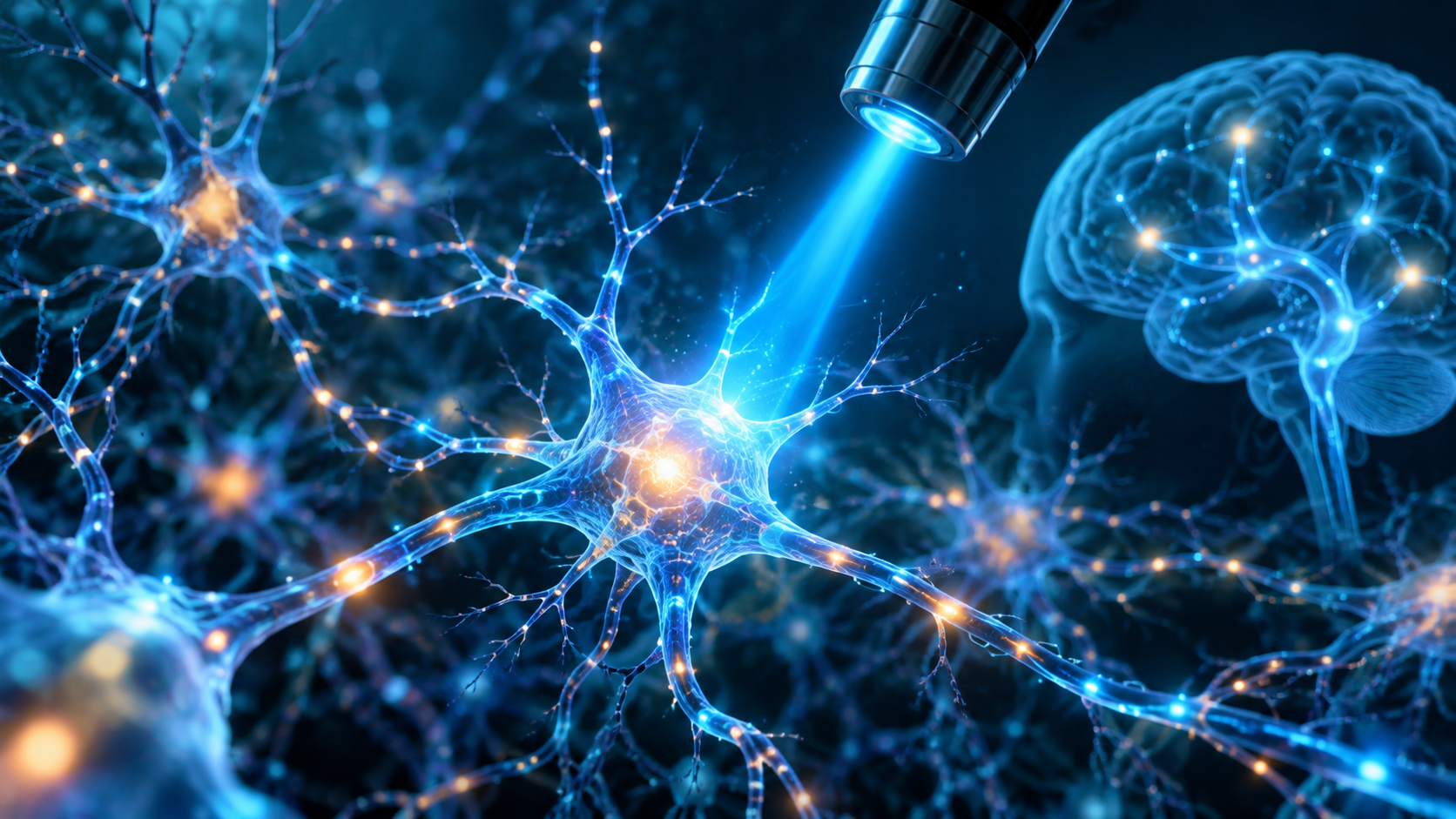
On October 5, 2026, the Nobel Prize in Physiology or Medicine was awarded to Karl Deisseroth, Peter Hegemann, and Georg Nagel for discoveries related to light-activated ion channels and the development of optogenetics. Their work laid the foundation for an entirely new way of studying and controlling the activity of nerve cells using light. Karolinska Institutet
Optogenetics brings together genetics, neuroscience, and light-based stimulation. By introducing light-sensitive proteins into selected cells, researchers can activate or inhibit those cells with exceptionally high spatial and temporal precision.
At the heart of this technology are channelrhodopsins — light-sensitive ion channels whose study by Peter Hegemann and Georg Nagel helped pave the way for Karl Deisseroth and his team to use light as a highly precise biological “switch” for nerve cells. Karolinska Institutet
The brain contains an enormous number of interconnected nerve cells. For many years, scientists were able to observe which areas of the brain became active, but it was far more difficult to determine precisely which cells were responsible for a particular response, movement, sensation, or behavior.
Optogenetics allows researchers to switch selected groups of neurons on or off using brief pulses of light. This makes it possible to investigate the relationship between neural activity and functions such as memory, emotion, behavior, and many other physiological processes with far greater precision. Nature
Optogenetics was initially developed primarily as a research tool, but over time its potential clinical applications have begun to emerge.
One of the most advanced areas of research involves partially restoring visual function in certain forms of severe vision loss. In this approach, gene therapy is used to make cells in the retina sensitive to light. Early clinical developments are promising, although the technology is still evolving and is not yet a standard treatment for most conditions. The Guardian
Research is also continuing across neurology and psychiatry, where the ability to selectively influence specific neural circuits may help scientists better understand complex disorders and the mechanisms underlying them.
The story of optogenetics is a striking example of how research that began with the study of light-sensitive proteins in single-celled organisms can lead to a technology capable of transforming modern neuroscience.
It also reflects a broader trend in medicine: a shift toward more precise and individualized interventions targeting specific cells and biological mechanisms, rather than relying only on approaches that affect the body more broadly.
It is important to distinguish optogenetics from conventional light-based treatments or photobiomodulation. Optogenetics relies on a combination of genetically modified, light-sensitive cells and carefully controlled light stimulation, making it a fundamentally different technology.